

In Thermopolis, Wyoming, we had the incredible privilege of spending a day at the Wyoming Dinosaur Centre working as palaeontologists.
This institution has the unusual advantage of having its museum sited very close to its digs, so provides a rare opportunity for people to experience field work in conjunction with visiting the museum itself.
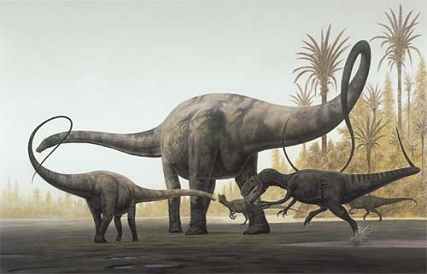
We worked on an active site (code: ATYA) containing what the museum believes to be a Diplodocus fossil: a large Jurassic plant-eater found in the Morrison Formation (see pic below). A number of the bones were already exposed through earlier digging, and we continued with our oyster knives and brushes to continue the search. At the end of the session, Matthew posed for a photo and as he loosened the final sheet of mud rock a small dark bone piece popped out of the earth!! It wasn’t identifiable in isolation, but will be catalogued with the other finds as they complete this part of the dig.
We ‘prospected’ on another hillside for marine fossils as this area was on the edge of a large inland sea and we found quite a few small fossilised squid, looking (and listening) carefully for rattlesnake which are very common in the area.
We also spent some time in the lab, cleaning the bones ready for presentation. This is painstaking work, and brings a completely new appreciation for the field. We worked with toothbrushes and dental implements, and eventually with a drill for the tougher removal of stone from the fossil. The whole process is somewhat therapeutic, if requiring incredible patience!


Lastly we had a private tour of the Museum by our guide for the day – Andrew – who is the Hill Manager for the site. The museum has some rare and fantastic specimens, including one of the few Archaeopteryx specimens in the world: Earth’s first bird. When Darwin published his theories of evolution, he surmised that there would be transitional species that demonstrated features of both an ancestral and a new descendent group – his critics noted the absence of such as a fossil as evidence against this theories. Just two years after publication of On the Origin of Species, the first Archaeopteryx fossil was discovered demonstrating both reptilian and bird features such as feathers (you can see these in the photo below). We were surprised to learn that today’s birds are actually the direct descendants of dinosaurs…


Other cool fossils in the museum (and also still embedded in the field) included fossilised tracks, an awesome snapshot of time with a bird eating a fish and then being caught itself at the water’s edge by an even larger predator fish.
A fantastic experience from a small but excellent institution. All Thermopolis photos here: next stop, a luxury break in Jackson Hole, Wyoming at the edge of the Grand Tetons.

 Tottlers On The Road
Wow guys what an experience
Warmly,
Lyndsay Babcock Director and Principal Psychologist LBP
0403 215 118 http://www.LBPsychology.com.au
>
LikeLike